

On January 12, 2026, an applicant in Houston was denied a lease due to a 2019 misdemeanor they believed was resolved. This scenario repeats hundreds of times daily across the state, causing applicants to lose non-refundable fees and valuable time. You need to understand exactly what disqualifies you on a background check for an apartment in Texas to avoid these certain denials. Landlords demand fast, verified data, and you must be prepared to meet those standards before submitting your application.
You already know that a single mistake can stall your housing search. This guide empowers you with the legal criteria and credit red flags that property managers use to screen tenants. We’ll analyze the 7-year lookback period for criminal records and the specific debt-to-income ratios required by major complexes. By using nationwide background check services to view your own official records first, you can address errors and move into your new home without hesitation.
Key Takeaways
- Review Texas Property Code requirements to ensure landlords provide clear, written screening criteria before you submit an application.
- Identify the specific financial and criminal red flags that determine what disqualifies you on a background check for an apartment in Texas under 2026 guidelines.
- Learn why evictions are often considered the “kiss of death” for renters and how long they remain visible on your consumer report.
- Navigate the shift from blanket criminal record bans to individualized assessments for violent or drug-related offenses.
- Take control of your data by using our nationwide background check services to pre-screen your record and address issues before paying application fees.
Understanding Texas Tenant Screening Laws and Written Criteria
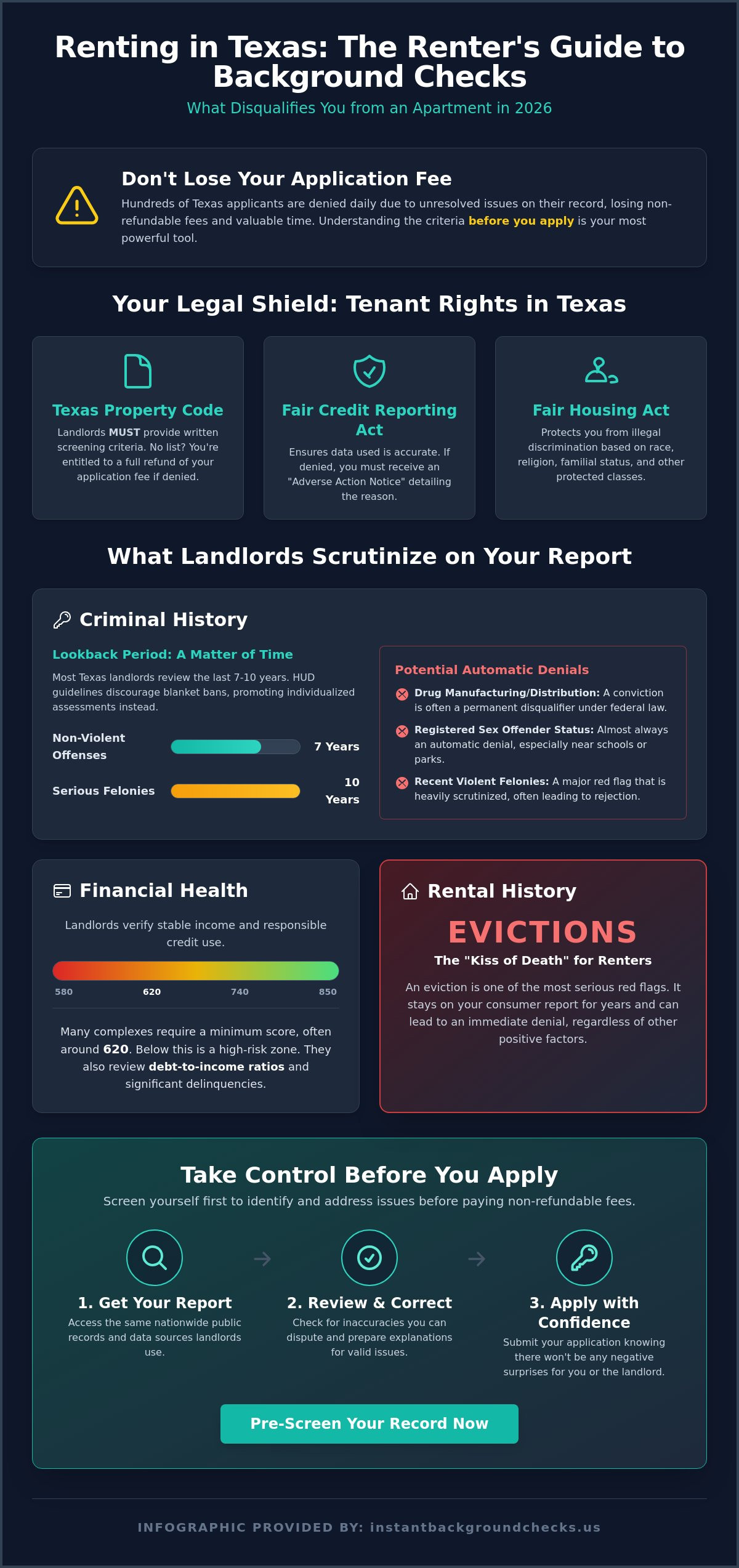
Texas Property Code Sec. 92.3515 dictates that landlords must provide written notice of their selection criteria at the time an application is provided. This is a strict mandate. You must know exactly what disqualifies you on a background check for an apartment in Texas before you hand over any non-refundable fees. This document must list every potential reason for denial, including criminal history, previous evictions, and specific credit score thresholds. If a landlord fails to provide this criteria and subsequently denies your application, they’re legally obligated to refund both the application fee and any security deposit under Texas law.
The Fair Credit Reporting Act (FCRA) governs how nationwide background check services handle your sensitive data. It ensures that the information used to judge your eligibility is accurate and current. An Adverse Action Notice is a legally required document that a landlord must provide if they deny your application based on information found in a credit or background report. This notice empowers you to see exactly what led to the rejection so you can take corrective action immediately.
The Legal Requirement for Written Disclosure
Landlords must list all reasons for potential denial in writing upfront. This transparency allows you to “pre-screen” your own background check against their specific requirements. In 2026, the Texas Property Code remains a primary defense for renters. If the written criteria aren’t provided, the landlord loses the right to keep your application fee. Use this list to identify red flags like a 620 credit score requirement or a “no violent felonies” policy. Knowing these details saves you money and prevents wasted effort on properties where you don’t meet the baseline standards.
Federal Protections: FHA and FCRA
Federal law provides a critical safety net through the Fair Housing Act (FHA). It prevents landlords from using a background check as a tool for illegal discrimination based on race, religion, or familial status. Accuracy is paramount in these high-stakes decisions. Under the FCRA, you have the right to dispute any inaccurate or outdated information found on a tenant screening report. We provide access to verified, nationwide data sources to ensure you’re looking at the same official records landlords see. Reliable data prevents surprises during the application process. Accessing comprehensive public records gives you the leverage to correct errors before they lead to a formal denial. Don’t leave your housing future to chance; verify your records today.
Criminal History Disqualifiers: Blanket Bans vs. Individualized Assessment
The landscape of Texas leasing changed significantly by 2026. Landlords no longer rely on simple “yes” or “no” checkboxes for criminal records. Federal guidelines from HUD now discourage blanket bans. These bans often lead to legal challenges. Instead, property managers use individualized assessments to evaluate applicants. This shift means your past does not always dictate your future housing. Understanding what disqualifies you on a background check for an apartment in Texas requires looking at specific crime categories and the time elapsed since the incident.
Most Texas landlords utilize a lookback period of 7 to 10 years. For many non-violent offenses, a record older than seven years may not be grounds for denial. However, serious felonies often carry a 10-year weight. Our company provides nationwide background check services to help you see exactly what a landlord sees before you apply. Speed and accuracy are vital when your housing is on the line.
Offenses That Trigger Automatic Denial
Certain crimes remain high-risk triggers for immediate rejection. Federal law provides landlords with specific leeway regarding drug manufacturing. If a record shows a conviction for the illegal manufacture or distribution of a controlled substance, denial is almost certain. This is a permanent disqualifier in many jurisdictions across the U.S.
Safety standards also prioritize the sex offender registry search during the screening process. Registered sex offenders frequently face automatic denial. This is especially true if the property is located within 1,000 feet of schools, parks, or daycare centers. Recent violent felonies also lead to rejection. Crimes such as homicide, kidnapping, or aggravated robbery committed within the last 10 years are standard deal-breakers for property managers serving clients nationwide.
The Individualized Assessment Process
An individualized assessment is a deep dive into the context of a criminal record. Landlords must consider the nature and gravity of the offense. They also look at how much time has passed since the conviction or release. This process ensures that what disqualifies you on a background check for an apartment in Texas is based on current risk rather than past mistakes. The Tenants’ Rights Handbook provides essential guidance on how these screenings should legally proceed to prevent discrimination.
You have the right to provide evidence of rehabilitation. Landlords may look favorably on the following items:
- Proof of steady employment for 12 consecutive months.
- Letters of recommendation from reputable community members.
- Completion of court-ordered rehabilitation programs.
- Evidence of a clean record since the initial offense.
Arrest records without a resulting conviction cannot be the sole basis for a housing denial. If a case was dismissed or resulted in an acquittal, it should not impact your eligibility. Verify your records today using our background checks across the U.S. to ensure no errors are standing in your way.
Financial Red Flags: Credit Scores and Income Requirements
Financial stability serves as the primary metric for risk assessment in the rental industry. In Texas, most corporate property managers set a minimum credit score threshold between 600 and 650. If your score falls below this 600-point mark, your application faces immediate scrutiny. Landlords use these numbers to predict your likelihood of consistent payment. Beyond the score, the “3x Rent” rule remains a standard requirement. This means your gross monthly income must be at least three times the cost of the monthly rent. Landlords verify these figures through nationwide background check services to ensure the data is accurate and verified across all 50 states.
Credit history tells a deeper story than a simple three-digit number. High debt-to-income ratios often disqualify applicants even with good credit because they indicate that too much of your monthly earnings is already committed to existing creditors. Property managers look for a clear path to payment; if your debt obligations leave little room for living expenses, you represent a high default risk.
Credit Report Deal-Breakers
Specific entries on a credit report function as automatic triggers for denial. Active bankruptcies that haven’t reached a final discharge are major red flags. Landlords view an open bankruptcy as a sign that your finances are currently under court supervision, which complicates their ability to collect rent. Unpaid utility collections are equally damaging. Since utilities are essential services, failing to pay a previous electric or water provider suggests you may struggle to maintain the property. The Texas Department of Housing and Community Affairs offers resources for renters to understand their rights when facing these financial barriers. Additionally, any vehicle repossessions or a consistent history of late payments within the last 24 months will likely lead to a rejected application.
Income Verification and Employment Stability
You must provide concrete evidence of your ability to pay. Standard documentation includes your two most recent pay stubs, the previous year’s tax returns, or 90 days of consecutive bank statements for self-employed individuals. Corporate property managers prioritize stability; gaps in employment longer than 60 days without a documented reason can be problematic. If you don’t meet the strict income or credit requirements, you may need a co-signer or guarantor. These individuals usually must earn 5x to 6x the monthly rent and pass the same rigorous screening process. Understanding what disqualifies you on a background check for an apartment in Texas allows you to prepare these documents or secure a guarantor before you pay non-refundable application fees.
Eviction Records and Rental History: The Major Disqualifiers
An eviction record is the ultimate red flag for property managers. In the high demand rental markets of 2026, most landlords view a past eviction as a permanent disqualifier. This record signals a high risk of non-payment or legal friction. Under the Fair Credit Reporting Act, these records typically remain on a consumer report for 7 years from the date of the judgment. Even if you have improved your financial situation, that 7-year window remains a firm barrier for many corporate housing providers.
Broken leases and outstanding landlord debt are also critical factors in what disqualifies you on a background check for an apartment in Texas. These items often appear as collections on your credit report or within specialized tenant screening databases. Landlords use nationwide background check services to identify if an applicant owes money to a previous property. Debts as small as $200 can trigger an automatic rejection in automated screening systems. You must understand the difference between a filed eviction and a final judgment. A filing indicates that a landlord started the legal process, while a judgment is a court’s final ruling. Both can appear on your record and influence a leasing decision.
How Eviction History is Tracked
Property managers rely on specialized databases to pull a comprehensive eviction history. These digital archives aggregate data from justice of the peace courts across every county. Even a dismissed eviction case can cause significant issues. If the filing exists in the public record, it may show up during a search. To address a past eviction, you should obtain a copy of your report early. Provide a written statement or proof of a settled balance to the new landlord before they run their own check. Transparency is your only tool when a record is verified and accurate.
Negative Rental References
Your rental history goes beyond court records. Lease violations like consistent noise complaints or unauthorized pets create a pattern of non-compliance. Property damage claims are another major hurdle. If a previous landlord reported damages that exceeded your security deposit, this debt will likely surface. A clean “Previous Address History” report is essential. If a background check reveals an undisclosed address where you had a negative experience, the landlord will view the omission as a sign of dishonesty. Verified data from serving clients nationwide shows that consistency between your application and your public record is the best way to avoid a fast rejection.
Don’t let hidden records surprise you during your next application. Search your public records now to see what landlords will find.
How to Pre-Screen Your Record Using Nationwide Background Check Services
Stop guessing about your eligibility. Texas rental markets remain highly competitive in 2026. Landlords and property managers process hundreds of applications monthly; they use automated systems to filter candidates instantly. You need to see exactly what they see before you submit your non-refundable application fee. Running your own report empowers you to fix errors or prepare explanations ahead of time. It’s the only way to ensure your application isn’t rejected for a preventable reason.
Why Use a Nationwide Service?
Landlords utilize nationwide background check services to look beyond state lines. If you’ve lived in multiple states over the last 7 years, a local search is insufficient. Our platform provides immediate access to multi-state criminal databases, sex offender registries, and eviction records. Instant reports deliver data in seconds. Manual county courthouse searches can take 5 to 10 business days. Don’t let a slow process cost you the apartment while another applicant’s data clears faster.
The Federal Trade Commission reports that 20 percent of consumers find errors on their credit or background reports. These inaccuracies often include identity mix-ups or outdated criminal records that should have been sealed. Check your report for incorrect middle names or charges that were dismissed but still appear as convictions. If you find an error, contact the reporting agency immediately. They generally have 30 days to investigate and correct verified inaccuracies under federal law.
Preparing Your “Mitigation Package”
Prepare a professional mitigation package if you identify potential red flags in your history. This package should include a formal Letter of Explanation for past credit issues or criminal history. Provide three months of verified pay stubs showing income that meets the common 3x rent threshold. Include contact information for two previous landlords who can vouch for your reliability. This proactive approach shows responsibility. It directly addresses what disqualifies you on a background check for an apartment in Texas by providing the human context that automated screening software misses.
Use this 2026 rental-ready checklist to stay ahead of the competition:
- Verified Background Report: Run a comprehensive nationwide search to identify potential red flags.
- Proof of Income: Gather tax returns or the last 90 days of pay stubs.
- Letter of Explanation: Draft a concise summary of any past legal or credit issues.
- Reference List: Secure contact details for two professional and two personal references.
- Collection Receipts: Keep documentation showing that any outstanding utility or rental collections are paid in full.
Take control of your data now. Knowing what disqualifies you on a background check for an apartment in Texas is only half the battle. The other half is having the verified information ready to defend your application. Access your records today to ensure your next move is a success.
Secure Your Next Lease with Confidence
Texas property managers follow strict written criteria when evaluating your application. You’ve learned that criminal records, eviction history, and financial instability are the primary factors that lead to a denial. Knowing what disqualifies you on a background check for an apartment in Texas is the first step toward a successful move. Don’t leave your housing future to chance. Landlords in 2026 prioritize applicants who are prepared and transparent about their past.
You can verify your own records before submitting an application. Instant Background Checks has been serving clients nationwide with secure, private data since 1982. Our platform provides nationwide background check services that include comprehensive criminal, credit, and eviction records immediately. There are no monthly or annual fees; you only pay for the reports you need. It’s the most efficient way to see what property managers see. Run Your Own Instant Background Check Now and step into your new home with peace of mind.
Frequently Asked Questions
Can a Texas landlord deny me for a misdemeanor from 5 years ago?
Yes, Texas landlords can deny your application based on a misdemeanor conviction regardless of its age. While the Federal Fair Housing Act encourages landlords to consider the nature and severity of the crime, no state law prohibits them from rejecting applicants for 5 year old offenses. Understanding what disqualifies you on a background check for an apartment in Texas is vital since 90 percent of property managers prioritize safety and liability.
What is the minimum credit score needed for an apartment in Texas?
Most Texas landlords require a minimum credit score of 620 to 650 for standard approval. Applicants with scores below 600 often face automatic rejection or are required to pay a double security deposit to mitigate risk. According to 2025 rental market data, 85 percent of corporate owned complexes utilize automated scoring systems that immediately flag scores under the 600 threshold. Check your records before applying.
How far back does a criminal background check go for apartments in Texas?
Criminal background checks in Texas can report convictions older than 7 years if the monthly rent exceeds $1,500. Under the Fair Credit Reporting Act (FCRA), arrests without conviction are limited to a 7 year window. However, for higher end rentals, landlords often see felony and misdemeanor convictions from 10 or 20 years ago. Background checks across the U.S. show exactly what records appear on your profile.
Is it legal for a landlord to have a “no felonies” policy in 2026?
Blanket “no felonies” policies are generally illegal under HUD guidelines updated in 2022. Landlords must conduct an individualized assessment rather than issuing a total ban. If a policy fails to distinguish between a 10 year old drug possession charge and a recent violent crime, it may violate the Fair Housing Act. Landlords must prove the policy’s necessary to protect property and resident safety.
Do Texas apartments check for evictions in other states?
Yes, most Texas landlords use national databases to identify evictions filed in all 50 states. Tenant screening reports aggregate data from county courts across the U.S. to find filings from the last 7 years. Even if an eviction occurred in Florida or New York, it’ll likely show up during the screening process. Utilizing nationwide background check services allows you to identify these red flags before a landlord does.
What happens if a landlord denies me without giving a reason?
If a landlord denies you based on a background report, they’re legally required to provide an Adverse Action Notice under the FCRA. This notice must include the contact information for the screening agency used. Failure to provide this reason is a federal violation. You’ve the right to request a free copy of the report within 60 days to dispute any inaccuracies found.
Can I get my application fee back if I am disqualified?
Application fees are typically non-refundable in Texas once the landlord processes your background check. These fees, which often range from $50 to $100 per adult, cover the administrative costs of the screening. However, if the landlord hasn’t performed the check yet, you might be entitled to a refund. Always review the written rental application for specific refund policies before submitting payment.
How long does a typical tenant background check take in Texas?
A standard tenant background check takes between 24 and 72 hours to complete. Delays occur if a county clerk must manually search paper records or if a previous landlord is slow to respond to verification requests. Knowing what disqualifies you on a background check for an apartment in Texas helps you prepare, but the actual data retrieval is usually instant when accessing digital public record databases through our platform.
